


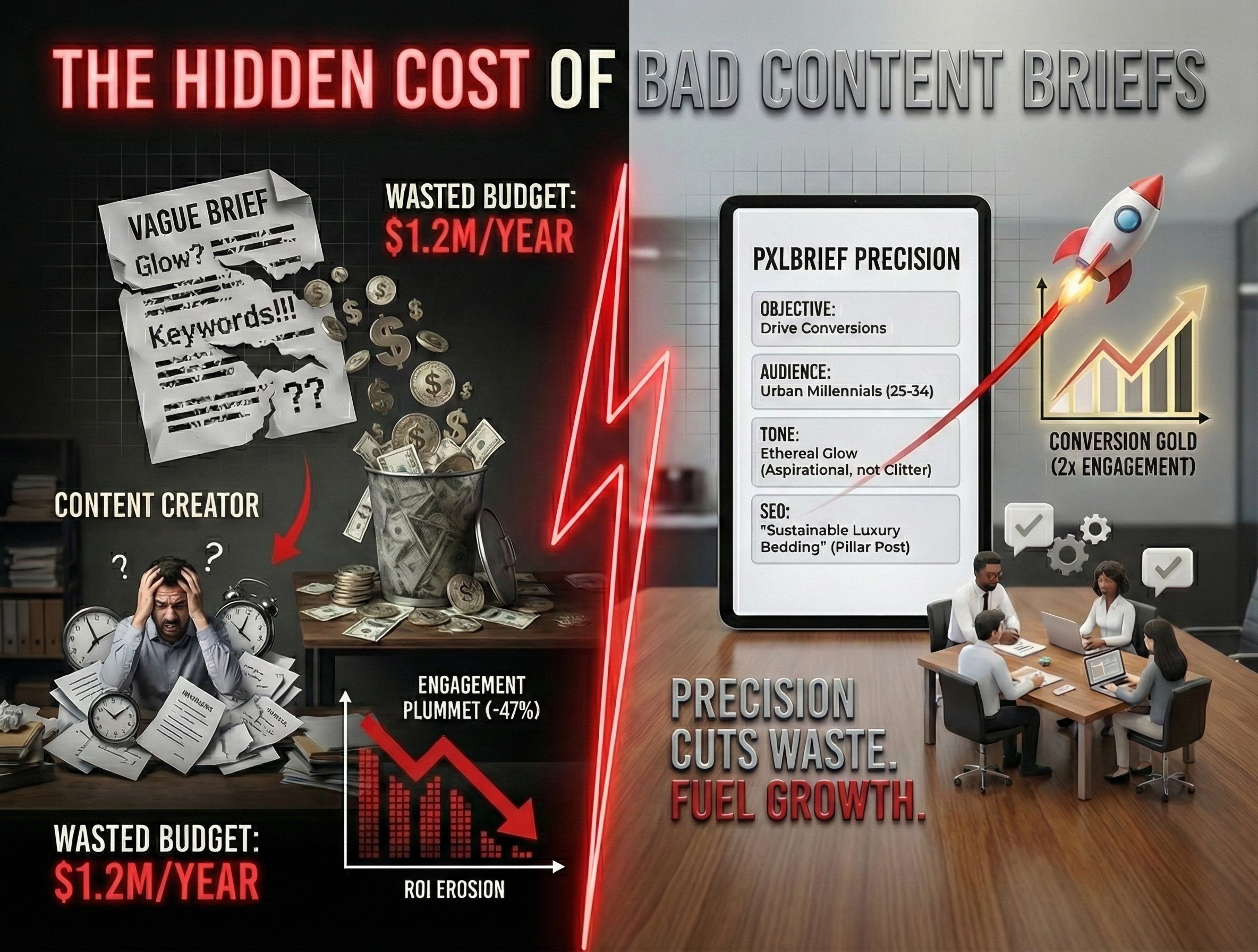
Imagine launching a high-stakes campaign for your luxury skincare brand, only to watch engagement plummet by 47% because the content team misinterpreted “ethereal glow” as literal glitter effects. Or picture your home decor line’s blog post, meant to drive SEO traffic, tanking rankings due to vague directives that led to keyword-stuffed drivel. These aren’t hypotheticals—they’re the stark reality for brands wasting up to $1.2 million annually on content rework, according to a 2024 Content Marketing Institute report. In the fast-paced world of digital marketing, bad content briefs aren’t just oversights; they’re silent profit killers, eroding budgets, timelines, and trust. At Pxlbrief, we’ve seen firsthand how razor-sharp briefs transform chaos into conversion gold—let’s uncover the hidden toll and how to fix it.
What Makes a Content Brief “Bad”?
A bad content brief starts with ambiguity, leaving creators guessing about tone, audience, or goals. Without specifics—like targeting urban millennials with a 25-34 demographic skew or mandating a 1,500-word pillar post optimized for “sustainable luxury bedding” with three internal links—writers produce generic fluff that fails to resonate. Research from Semrush reveals that 68% of content fails to meet KPIs due to unclear briefs, forcing endless revisions. This isn’t mere nitpicking; it’s a cascade of inefficiency where brands lose momentum in competitive SEO landscapes and social feeds.
The Financial Drain You Can’t Ignore
The numbers hit hard: poor briefs inflate content production costs by 30-50%, per a HubSpot study, as teams cycle through drafts averaging 3.2 revisions each. For a mid-sized luxury brand spending $200,000 yearly on content, that’s $60,000-$100,000 flushed on fixes alone—not counting opportunity costs like delayed launches that miss seasonal peaks. Ad spend amplifies the pain; mismatched content underperforms Meta ads, slashing ROAS from 4:1 to barely 1.5:1. Brands intelligent about their craft know this: precise briefs cut waste, ensuring every dollar fuels traffic and sales.
Time Lost in the Revision Abyss
Deadlines slip when briefs lack structure, turning a one-week project into a month-long ordeal. Writers spend 40% of their time clarifying ambiguities, as noted in a 2025 WriterAccess survey, delaying posts that could capture trending searches. In SEO-driven worlds, this means losing prime indexing windows—Google favors fresh, authoritative content, and vague briefs yield thin results that algorithms demote. Luxury brands can’t afford this; a single delayed campaign might forfeit 20% of projected leads during peak shopping seasons.
Eroding Team Morale and Brand Voice
Beyond metrics, bad briefs breed frustration. Creatives disengage when directives feel like riddles, leading to 25% higher turnover in content teams, per LinkedIn data. Inconsistent output dilutes brand voice—think a premium beauty post sounding salesy instead of aspirational—eroding audience trust and loyalty. Smart brands mitigate this with briefs that empower, fostering collaboration and ownership for content that truly shines.
Reclaim Control with Pxlbrief’s Precision
Masterful briefs detail objectives, personas, key messages, and success metrics upfront, slashing errors by 65%, as our Pxlbrief clients report. Integrate tools like audience heatmaps and competitor analysis to craft briefs that drive 2x engagement. Start with templates emphasizing clarity: define CTAs, tone (e.g., “elegant authority”), and assets needed.
Conclusion
Bad content briefs silently sabotage your brand’s potential, costing millions in rework, missed opportunities, and morale dips. By prioritizing precision, you unlock efficiency, amplify ROI, and elevate your voice in crowded digital spaces. Embrace structured briefs with Pxlbrief today—transform hidden costs into measurable wins that propel your luxury brand forward.
Tagged with :